Everyday questions & writing
Ask, explain, draft an email, rework a paragraph.
Speed & cost — quality is a given
Grok 4.1 Fast$0.28/M · 83/100
Clears the bar. Step up to the frontier only when the writing must land a subtle, high-stakes tone.
Field guide/EDUCATION/GUIDE
There is no best AI model, only the best fit for the job in front of you. Start from the work you actually do, weigh the six levers that decide it, then escalate only when a model demonstrably fails.
00 parts · 8 min read · Figures computed live
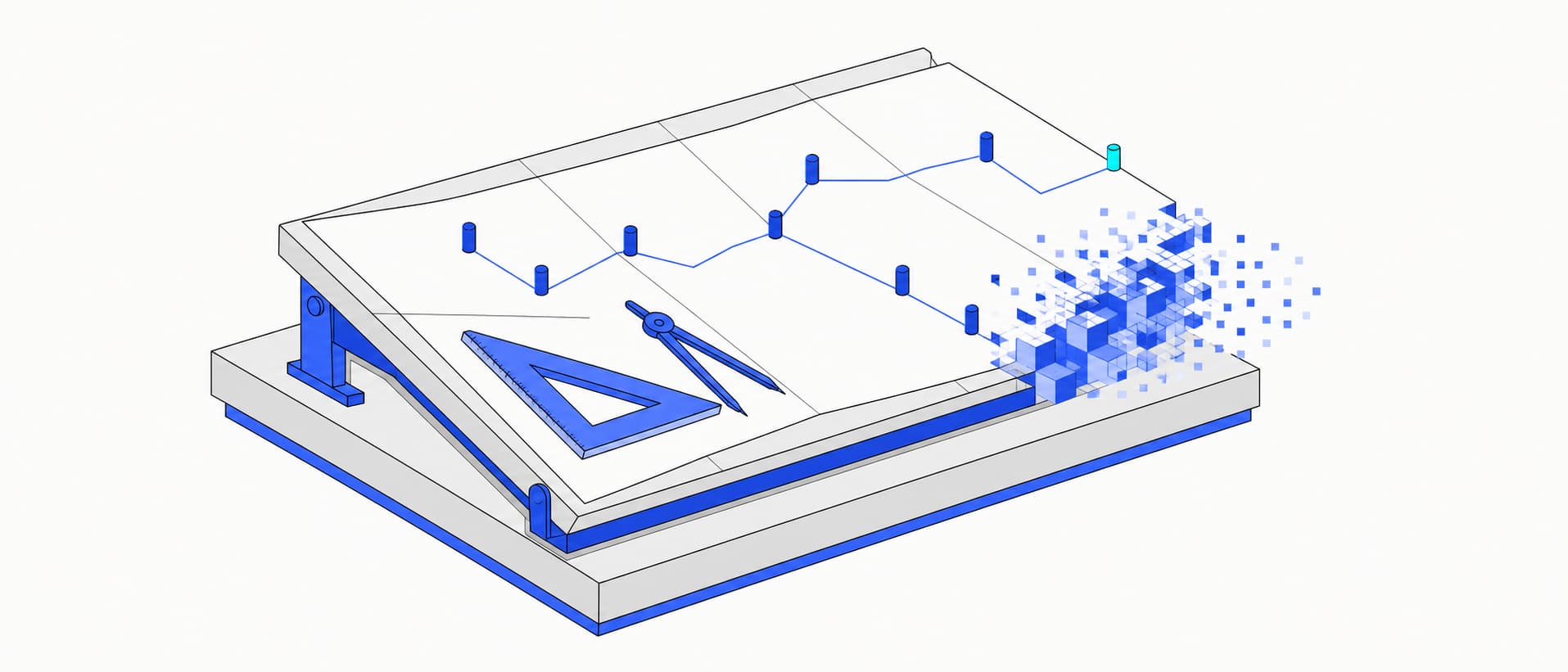
Fig.01 — Survey the route before you buy the vehicle
/GUIDE
Picks resolved live
Find the kind of work you actually do and start with a model that clears the bar for it. Most everyday jobs never reach the frontier — each pick below, and the factor that decides it, is resolved from the live catalog rather than written down.
Ask, explain, draft an email, rework a paragraph.
Clears the bar. Step up to the frontier only when the writing must land a subtle, high-stakes tone.
Summarize a report, cross-read many sources, pull out the answer.
Clears the bar. Step up to the frontier only when you need dense synthesis across dozens of sources at once.
Generate product copy, variations, and social posts by the thousand.
Clears the bar. Step up to the frontier only when a flagship campaign needs a distinctive, on-brand voice.
Clean a table, categorize rows, extract fields into a tidy format.
Clears the bar. Step up to the frontier only when the logic is intricate and a wrong cell is expensive.
Answer common questions, route tickets, draft replies around the clock.
Clears the bar. Step up to the frontier only when a hard escalation needs real reasoning, not a canned reply.
Write and fix code, or run a tool-using agent through many steps.
Clears the bar. Step up to the frontier only when the work is a multi-file refactor or a long autonomous run.
Translate documents and chat fluently across many languages.
Clears the bar. Step up to the frontier only when the text is literary, legal, or highly idiomatic.
Spin up ideas, names, outlines, and first drafts to react to.
Clears the bar. Step up to the frontier only when you want a genuinely distinctive, publishable voice.
The honest through-line
In every one of these 8 jobs a non-frontier model clears the bar, averaging about $0.71/M. The frontier flagship, Claude Fable 5, runs $20/M and is for the hard, high-stakes, long-horizon minority. Reach for it on purpose, not by default.
Each pick is the best capability-per-dollar model that clears a sensible quality bar for that job, chosen live from the catalog. The score averages the axes that decide the job; price is blended at a typical 3:1 input-to-output ratio.
06 levers · 05 stops
Six levers, weighed against each other, and one heuristic that keeps you from overpaying: start cheap, escalate only on evidence.
How hard is the task, really?
Most work — answering a question, drafting an email, tidying a spreadsheet, summarizing a report — is solved by mid-tier models. Capability only becomes the binding constraint on genuinely hard problems: book-length analysis, novel reasoning, multi-file code or long-horizon agents where small errors compound.
What does one call cost — times your volume?
Price is per million tokens, so the gap between tiers explodes at scale. A frontier model can cost 20–50× a budget tier per token. At a million calls a day that is the difference between a rounding error and a line item that gets your project cancelled.
Is a human waiting on this token-by-token?
Reasoning models think before they answer, which is great for correctness and terrible for a chat cursor blinking at a user. Fast tiers and always-on reasoning sit at opposite ends; match the model's temperament to whether the response is interactive or batch.
How much must the model hold in working memory at once?
Context windows have ballooned, but big windows cost more and recall is not free — a model can technically accept a million tokens and still lose the thread in the middle. Size the window to the job, and prefer feeding in only what's relevant over stuffing everything in.
Can the data leave your walls?
Open-weight models can run on your own hardware, which changes the calculus entirely: no per-token bill, no data egress, full control over versioning and fine-tuning. You trade that for the operational burden of actually running inference well.
What goes in and what comes out?
Text-only models score near zero on vision for a reason — they can't see. If your inputs include images, PDFs, audio, or video, modality is a hard filter, not a preference. Check it first; it eliminates whole columns of the catalog before cost ever enters the picture.
The core heuristic
Start cheap. Escalate only when a model demonstrably fails — never on a hunch.
Eliminate anything that can't take your modalities, fit your context, or meet a privacy requirement. These are pass/fail — no amount of capability buys back a model that can't see your images or run on-prem.
Pick the fast or balanced model that could plausibly do the job. Build your prompt and evaluation against it. Most tasks stop here — and you've learned the shape of the problem cheaply.
Run real inputs and look for specific failure modes: dropped steps, shallow reasoning, format drift, hallucinated facts. Vague dissatisfaction isn't a signal; reproducible failures are.
Move up to the next tier and re-test the same failures. If they vanish, the upgrade earned its cost. If they don't, the problem is your prompt, your context, or your task design — not the model.
In production you rarely need one model for everything. Send the easy 90% to a cheap tier and route only the hard cases up. That blended cost is what good systems actually run on.
Decision stopObservation
Capability ÷ blended price
The question everyone asks. The answer is capability-per-dollar against task difficulty — read straight from the dataset.
94 ÷ $10/M blended
Reach for the flagship when failure is expensive and the task is genuinely hard — book-length analysis, long-horizon agents, multi-file refactors, frontier reasoning. You're buying reliability on problems where a cheaper model's mistakes cost more than the price gap.
Worth it on the hard 10%.
Opus costs roughly 5× Haiku per token — for +16 capability points. The flagship earns that gap only when the task actually demands it.
88 ÷ $6/M blended
The default. Strong enough for the overwhelming majority of real coding, analysis, and writing, at a fraction of flagship cost. If you don't have a specific reason to go up or down, start here.
The right call by default.
78 ÷ $2/M blended
When a human is waiting or the volume is enormous: chat, everyday questions, autocomplete, classification, extraction. It clears routine work at a price and latency the flagship can't touch — and routes the rare hard case upward.
Unbeatable on volume.
The pattern generalizes across every provider: a flagship, a balanced all-rounder, and a fast tier. The names change; the decision does not. Match the tier to the difficulty of the task, not to the prestige of the model.
GLM, Kimi, DeepSeek, Qwen and Llama made open weights genuinely competitive. Picking a side is a question of cost, privacy, and control — with both sets of tradeoffs on the table.
Claude, GPT, Gemini, Grok
Why you would
The honest tradeoffs
DeepSeek, Qwen, GLM, Kimi, Llama, MiniMax
Why you would
The honest tradeoffs
41 models · 5 tiers
Every model in the catalog, grouped into tiers and ranked by core capability. Scan a column to see which open or rival models sit in the same class as Opus, Sonnet, or Haiku.
Opus-class flagships. The ceiling on capability — and price.
Sonnet-class all-rounders. The default for most real work.
Think-first specialists for math, science, and hard logic.
Haiku-class workhorses for high-volume, latency-sensitive jobs.
Frontier-adjacent models you can self-host and own.
Capability is a 0–100 composite of reasoning, coding, math, knowledge, and agentic scores. Blended price assumes a 3:1 input-to-output ratio. Both are computed live from the dataset.
06 assumptions
Short, honest answers to the assumptions that quietly burn budget and ship worse products.
No. It's the most capable on the hardest tasks — but for routine work you're paying a premium you can't measure. The best choice is the cheapest model that reliably clears your quality bar, which is usually a tier or two down from the flagship.
Only at scale. Self-hosting trades a per-token bill for fixed GPU cost. Below a steady, high volume those accelerators sit idle and a managed API wins outright. Open weights pay off on privacy and control long before they pay off on price.
Not by itself. A window is capacity, not comprehension — recall in the middle of a huge prompt is unreliable, and you pay for every token you stuff in. Targeted retrieval beats a maximal context window almost every time.
They're different tools. Reasoning models trade latency and token cost for deeper step-by-step thinking, which is a win on math and logic and a waste on a chat reply. Match the temperament to the task, not the marketing.
Tempting, but wasteful. The strongest systems route: a cheap tier handles the easy majority and escalates only the hard cases. One model for everything means overpaying on the easy work or underperforming on the hard.
Benchmarks measure averaged, public tasks — not yours. A two-point lead on a leaderboard can vanish on your data, your formats, your edge cases. Treat benchmarks as a shortlist filter, then test the shortlist on your actual workload.