Personifypersonify-website.vercel.app
Everything you made, in one vault.
Personify turns the exports already sitting on your laptop—chats, mail, code, notes, and files—into a local Postgres archive you can search, connect, and hand to your agents without handing away ownership.
Local Postgres · Nine source adapters · Read-only MCP · Your hardware
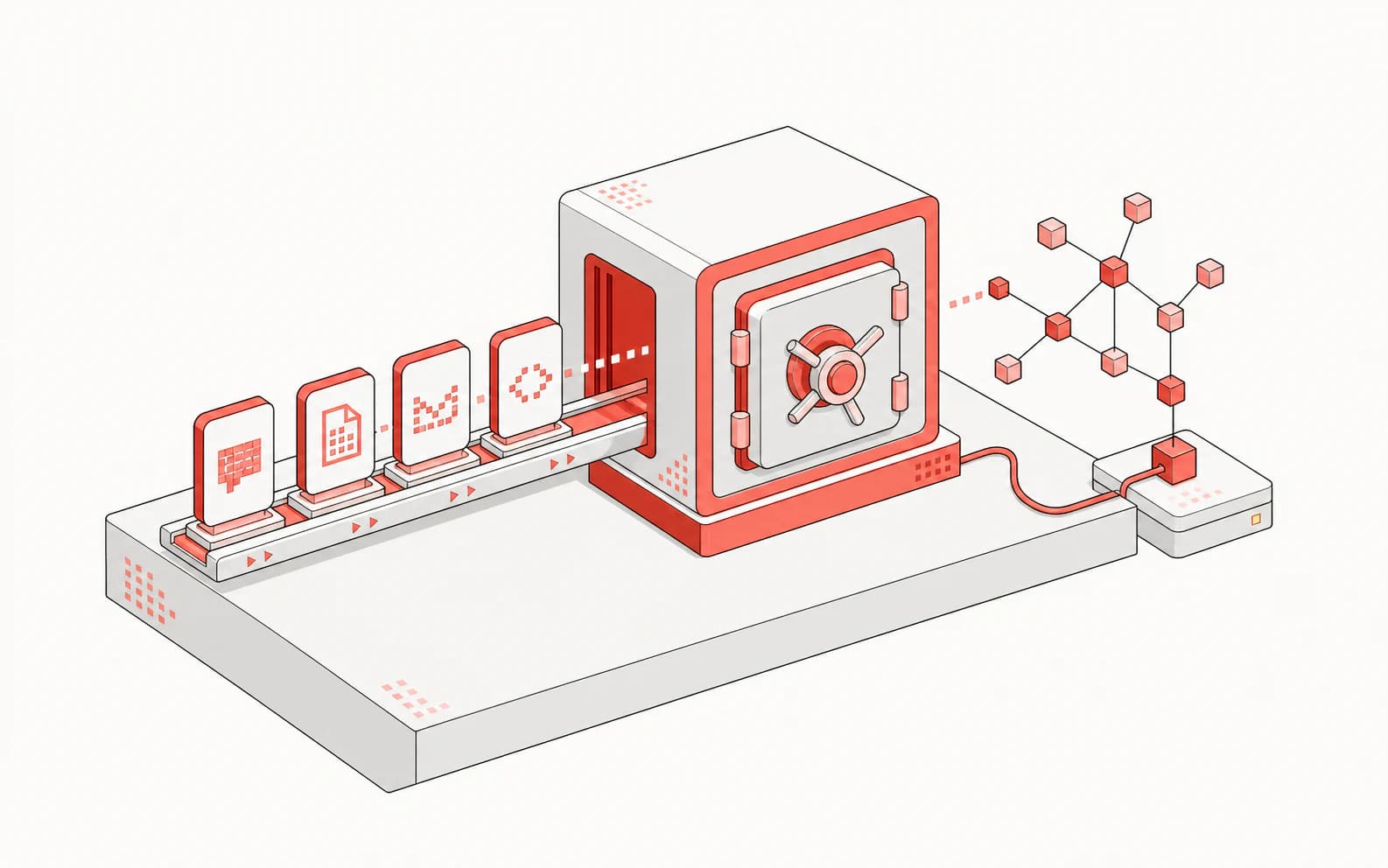
Fig.01 — The local archive
Raw copied · never moved
Bring the archive
Nine source adapters · Local files
 ChatGPT
 Claude
 Gmail
Gmail Discord
 Notion
 GitHub
 X
X Files
FilesExport files in · One normalized item schema out
Vault overview
Items · sources · runs
One place to see what your archive actually contains.
The real Personify dashboard leads with counts, source distribution, and ingestion history. Every bar opens the records behind it; every run keeps its parser version and outcome.

Vault overview
Dashboard
Personal data ingested from your services.
Items
5,796
Exports
5
Sources
4
Accounts
5
Runs
5
Immutable intake
Copy · hash · normalize · enrich
Import the source. Keep the evidence.
Register an export once. Personify copies and hashes the archive, selects the source parser, writes a normalized item stream, then optionally builds vectors and graph entities. Replace runs rebuild derived data—not history.
sourceWhere the record came fromaccountWhich identity owned itnative_idIts source-system identitycontent_hashStable fallback deduplicationmetadataSource-specific context, intact
Register an export
raw → normalized → queryable
Source parser
ChatGPTClaudeGitHubFilesPipeline complete
One immutable source, four reversible stages.
Register
archive copied · SHA-256
Ingest
2,906 items normalized
Embed
384-dim local vectors
Graph
1,248 entities extracted
seen
2,927
inserted
2,906
skipped
21
Search the whole you
Full text · Semantic · Source scoped
Find the thing you remember, not just the words.
Switch between literal full-text rank and local vector similarity, narrow by source, then open a result down to its account, native ID, ingestion run, hash, body, tags, and metadata.

Find
Search
Full-text or semantic, scoped or vault-wide. Open any result down to its immutable source.
Decision: keep pgvector inside the local Postgres stack
Item #4821
Identity
- source
- claude
- kind
- conversation
- account
- personal
- hash
- d9c0f1a84e67b312…
Body
Context graph
Entities · evidence · neighborhoods
Follow the connection back to proof.
Personify extracts projects, people, tools, decisions, files, topics, and more. The graph is not a decorative map: each relationship carries source evidence, aliases, and suggested follow-up queries.
22
entity types
1
hop at a time
100%
evidence linked

Knowledge graph
Walk the neighborhood.
Entity
personal vault
Project · 12 aliases
Evidence
“Keep retrieval inside the same local ownership boundary.”
Neighborhood
7 related · 11 edges
depth 1 · evidence linked
Agent access
13 tools · 6 resources · Read only
Give agents context, not custody.
The same search, timeline, item, and graph surfaces ship as a read-only MCP server over stdio, plus a UI-gated local HTTP transport. Claude Desktop, Codex, and local clients can ask; the vault remains yours.
Agent access
read-only MCP · active vault: personal
HTTP transport
Local endpoint, explicit switch.
- endpoint
- http://127.0.0.1:18765/mcp
- uptime
- 02:14:36
- requests
- 184
- sessions
- 2
$ vault --vault personal mcpTool surface
13 tools · 6 resources
search
full-text retrieval
semantic_search
meaning across sources
timeline
items by time window
get_item
source-linked record
entity_neighborhood
graph traversal
Recent requests
Ownership boundary
Four invariants
01
Raw stays raw
Exports are copied into immutable storage and SHA-256 verified. The source archive is never rewritten.
02
Identity survives
Native IDs deduplicate first; content hashes cover the rest. Re-importing the same export does not duplicate your history.
03
Enrichment is optional
Parsing is standard. Embeddings and graph extraction are opt-in stages you can re-run without touching the original.
04
Vaults stay separate
Named vaults get their own Postgres database and filesystem root, so work and personal context never have to mix.
Open the vault
personify-website.vercel.app
Start with one export
Your archive should answer to you.
Set up the local vault, register the exports you already own, and give your agents a context layer that stays on your hardware.
FastAPI · Postgres 17 · pgvector · Local filesystem · MCP